

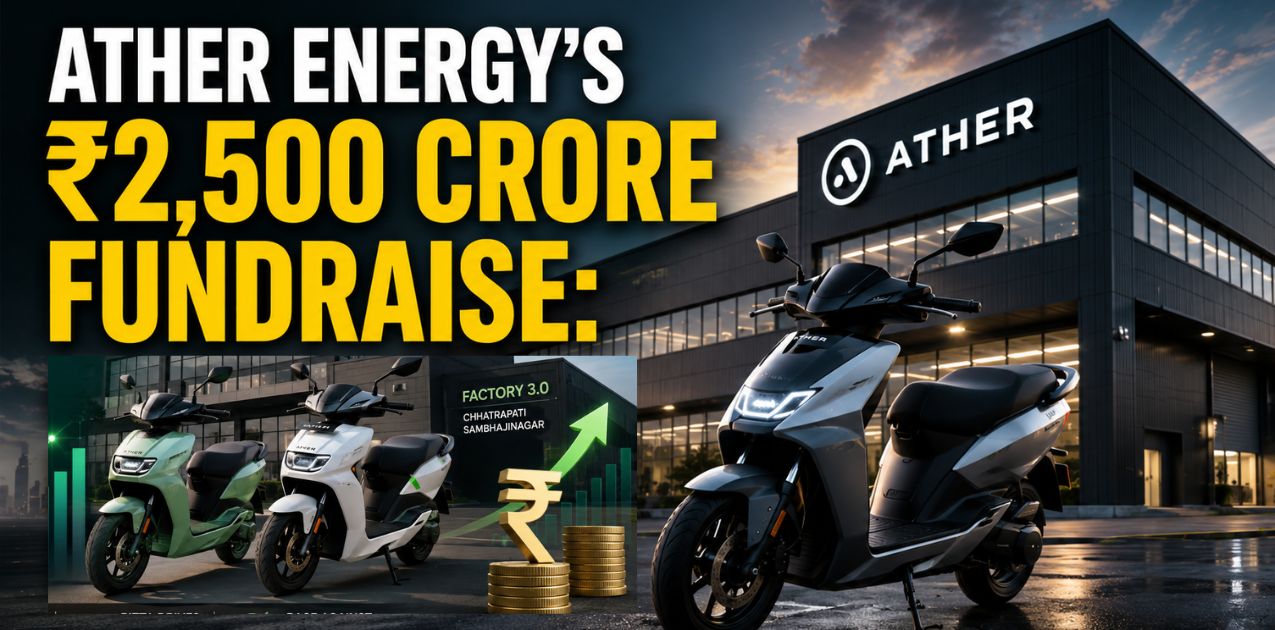
Ather Energy’s Bold ₹2,500 Crore Fundraise Explained
Ather Energy has announced a significant ₹2,500 crore fundraise via Qualified Institutional Placement (QIP) and Foreign Currency Convertible Bonds (FCCBs), just over a year after its IPO. This move is a pivotal moment for the electric vehicle (EV) manufacturer, aimed at expanding production capacity and strengthening its position against established rivals in India’s rapidly evolving EV market. For those tracking Ather Energy funding, the details offer key insights into the company’s growth strategy and the broader industry landscape.
Breaking Down the Fundraise Structure
The board of Ather Energy approved the plan to raise up to ₹2,500 crore in two tranches: up to ₹1,500 crore via QIP—targeted at qualified institutional buyers—and ₹1,000 crore through a combination of preferential allotment, rights issue, or FCCBs. A dedicated committee has been formed to oversee the fundraising process, with final terms and pricing to be determined in line with SEBI regulations and shareholder approval via e-voting.
The QIP route allows Ather Energy to access domestic institutional capital efficiently, while FCCBs open the door to cheaper international funding, with the flexibility to convert debt into equity at a later stage. This structure not only diversifies the investor base but also manages dilution risks, which is crucial for existing shareholders tracking Ather Energy funding.
Why the Urgency? The Factory 3.0 Challenge
Ather’s expansion is driven by its rapidly increasing market share and constrained production capacity. The company’s two existing facilities in Hosur, Tamil Nadu, have a combined annual capacity of 4.2 lakh units. In the last fiscal year (FY26), sales surged to over 2.39 lakh units, with Q4 alone accounting for more than 83,000 units—putting the plants at close to full utilization.
The solution lies in Factory 3.0, a new 98-acre facility in Chhatrapati Sambhajinagar (Bidkin AURIC industrial zone), set to begin commercial operations in October 2026. When fully operational, this plant will boost annual capacity to 1.42 million units. The initial IPO proceeds of ₹927 crore earmarked for the new factory have already been invested. The fresh Ather Energy funding will finance the completion of Factory 3.0, ramp up working capital, and support the launch of the new EL platform for mass-market electric scooters.
Ather’s Competitive Edge in India’s EV Race
India’s electric two-wheeler market is fiercely competitive, with total FY26 sales reaching 14.01 lakh units—a 21.81% jump from the previous year. Ather Energy’s growth stands out: its market share nearly doubled from 8% to 18.6%, driven largely by the launch of the Rizta scooter, which now contributes over 70% of Ather’s sales. This growth outpaced legacy giants TVS and Bajaj, who together control about 45% of the market but benefit from established, profitable businesses and greater resources.
Ather’s expansion strategy also included doubling its retail footprint and service centers, moving aggressively into new geographies like Gujarat and Maharashtra. The upcoming EL platform, a flexible architecture for multiple scooter variants, will be crucial for competing in the high-volume, sub-₹1 lakh segment dominated by Bajaj’s Chetak.
Comparing Ather to Ola Electric: Growth vs. Survival
The contrast between Ather Energy and Ola Electric is telling. While Ather raised ₹2,500 crore following impressive growth and market gains, Ola’s recent ₹780 crore fundraise came amid declining market share and profitability concerns. Ather’s approach signals confidence and positions the company for further expansion, while Ola’s raise appears more focused on sustaining operations.
Investor Tensions: Growth Bet or Dilution Risk?
For investors, the central question is whether the new Ather Energy funding will translate into lasting leadership or simply fund a costly battle against entrenched competitors. The market’s muted response (+0.029% on announcement day) reflects this uncertainty. Ather’s financials show strong revenue growth (₹3,672 crore FY26, up 63% YoY) and narrowing losses, but the risk of dilution through QIP and FCCB conversion remains a concern if share prices soften.
Additional risks include rising battery costs—lithium prices remain elevated, and cell costs have increased amid global supply chain pressures—potentially impacting margins even as Ather works to optimize costs and increase prices selectively.
The Road Ahead for Ather Energy
Ultimately, Ather Energy’s ₹2,500 crore fundraise is a calculated bet on the company’s ability to outpace rivals and capitalize on India’s EV boom. With 82% volume growth, a dramatically increased market share, and a transformative new factory on the horizon, the company has earned the right to pursue this aggressive expansion. However, the window of opportunity is narrow—TVS and Bajaj are not standing still, and any delays in Factory 3.0 could give them more time to consolidate their lead.
For those following Ather Energy funding, the next key milestone is the commissioning of Factory 3.0 in October 2026. The outcome will determine whether this fundraise cements Ather’s place as a market leader or merely sustains it in an ongoing battle for dominance.
This article is inspired by content from Original Source. It has been rephrased for originality. Images are credited to the original source.