

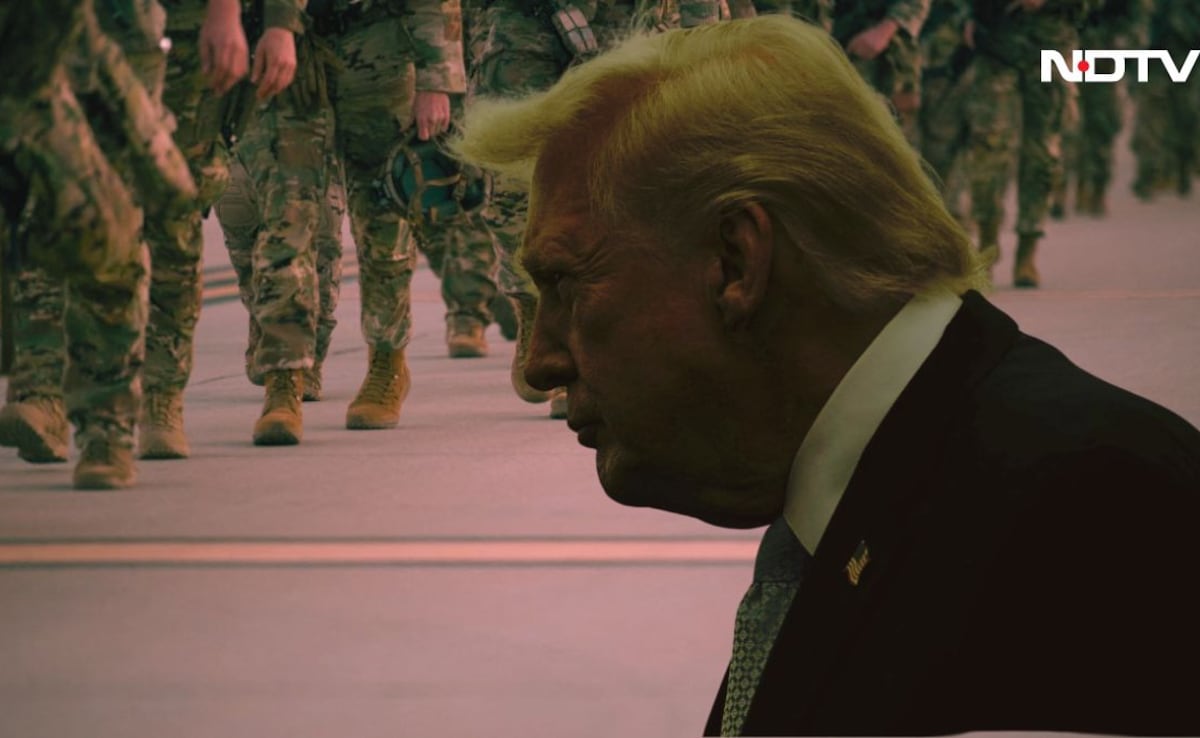
Trump’s Ambitious Defense Budget Proposal
Donald Trump’s defense budget proposal has sparked significant discussion across political and financial circles. Unveiled as part of his 2027 budget plan, the proposal seeks a staggering $1.5 trillion for the Pentagon, marking a 44% increase from the previous fiscal year. This move comes as global tensions, particularly in the Middle East, continue to escalate, prompting renewed focus on national security spending over domestic programs.
Key Elements of the Defense Proposal
The proposed $1.5 trillion defense budget would represent about 4.5% of the nation’s gross domestic product, making it the largest year-over-year increase in military spending since the Korean War, when adjusted for inflation. Trump’s plan not only increases the Pentagon’s regular budget by $455 billion over fiscal year 2026, but also introduces an emergency request for an additional $200 billion. This emergency fund is intended to bolster U.S. support in the ongoing US-Israel conflict with Iran, reflecting the administration’s commitment to military readiness.
A notable aspect of Donald Trump’s defense budget proposal is the allocation of funds to high-priority areas. These include the development of the Golden Dome missile defense system, investment in critical minerals essential for defense manufacturing, and significant boosts to shipbuilding capabilities. The budget also aims to raise salaries for U.S. troops and expand the nation’s space-based weapons systems to enhance protection against potential threats from abroad.
Comparing U.S. Military Spending Globally
The United States consistently outspends other nations on military investments. According to the Stockholm International Peace Research Institute, U.S. military expenditures grew from $320 billion in 2000 to an estimated $997 billion in 2024. The Peter G. Peterson Foundation notes that America’s military budget regularly surpasses the combined spending of the next nine highest-spending countries. In 2024, U.S. military spending reached $968 billion, with China trailing at $317 billion and Russia at $150 billion. Other major spenders include Germany, India, and Saudi Arabia, but none approach the scale of U.S. investments.
Impact on Domestic Programs and Federal Deficit
While Donald Trump’s defense budget proposal prioritizes military strength, it also recommends substantial cuts to domestic programs. The administration has proposed $73 billion in reductions across numerous federal agencies, targeting health, housing, and education programs—many of which serve minority and low-income communities. The plan includes a 10% decrease in non-defense spending and notable reductions for the Departments of Agriculture, Housing and Urban Development, and Health and Human Services.
The budget also eliminates certain grants, such as Community Services Block Grants, which provide crucial support for job counseling and housing assistance. In the face of rising federal deficits—nearly $2 trillion annually—and a national debt surpassing $39 trillion, the administration asserts these measures are necessary to maintain fiscal responsibility while strengthening national security.
Additional Budget Highlights
Several other significant allocations and cuts are included in the proposal. The Department of Justice would see a 13% funding increase to combat violent crime and address concerns about migrant crime. The budget also earmarks $10 billion for construction and beautification projects in Washington, D.C., via the National Park Service, and adds $481 million to aviation safety programs to support increased hiring of air traffic controllers.
However, the proposal cancels more than $15 billion in funds from the previous administration’s bipartisan infrastructure law, including money for renewable energy initiatives and NOAA grants. These shifts underscore the administration’s focus on redirecting resources from domestic projects to defense priorities.
What Lies Ahead for U.S. Defense Spending?
The future of Donald Trump’s defense budget proposal now rests with Congress, where it is expected to face intense debate. Supporters argue that such an increase is vital for maintaining the United States’ position as the world’s most powerful military force, especially amid global uncertainties. Critics, however, question the impact of deep domestic cuts and the long-term consequences of mounting federal debt. As the proposal moves forward, it will shape the conversation on national priorities and the balance between security and social investments.
Ultimately, the fate of this unprecedented defense spending plan will reveal much about America’s evolving approach to both global leadership and internal fiscal management.
This article is inspired by content from Original Source. It has been rephrased for originality. Images are credited to the original source.